What to Look for in a Video Editing Service for Your Business
A clean edit can still fail if nobody decided what the viewer should do next. Here is how I judge a video editing service: portfolio checks, questions and red flags.
On this page
The right video editing service for your business is one that has already edited the kind of video you need, for the platform you will post it on, and that asks what the video is supposed to achieve before touching your footage. After that, check turnaround, revision rounds, whether captions and motion graphics are done in house, and who owns the project files.
Before Calibre, when I was a sales executive at Block Buildtech in Lucknow, I edited promotional videos myself between follow up calls. I learned quickly that a technically clean edit can still fail if nobody decided what the viewer should do at the end. That lesson shapes how I judge editors today, including the ones on our own team.
Key takeaways
- Judge an editor on samples from your platform and format, not their most cinematic piece.
- The best editors ask about your goal and audience before they ask for footage.
- Get turnaround, revision rounds and file ownership in writing before the first project.
- Captions, sound and pacing matter more for business video than fancy transitions.
- Start with a paid test edit, then move to a monthly arrangement if it works.
Start with the job the video has to do
Before you look at any editor, write one sentence about each video: who watches it, where, and what they should do next. “A 30 second Reel for homeowners in our city that ends with a call to book a free estimate” is a brief. “Make our footage look good” is not.
Business video tends to fall into a few jobs:
- Attention: Reels, Shorts and TikTok clips meant to reach new people.
- Trust: testimonials, behind the scenes clips and talking head explainers.
- Conversion: ad creatives with a clear offer and a call to action.
- Depth: long form YouTube videos, webinars and podcasts.
Each needs a different editing rhythm. An editor brilliant at slow, cinematic brand films may be the wrong person for punchy ads, and the reverse is just as true. Knowing the job first stops you hiring on a showreel that has nothing to do with your needs.
What to look for in a video editing portfolio
Showreels are designed to impress, so look past them. Ask for three or four complete videos that match your format, and watch them the way your customer would: on a phone, with the sound off first, then on.
Check the first three seconds
On short form video, the opening decides whether anyone watches the rest. Does the edit open on the most interesting moment, or on a logo and a slow fade? Good social editors cut straight to the point.
Check the captions
Many people watch social video without sound, and captions also make your content accessible to viewers who are deaf or hard of hearing. The W3C explains why in its guidance on captions. Look for captions that are accurate, timed well, readable on a small screen and styled to match the brand.
Check the sound
Bad audio loses viewers faster than bad visuals. Listen for levelled voices, music that sits under speech instead of fighting it, and no harsh background noise.
Check whether it fits a brand
Across several videos for the same client, do fonts, colours and title styles stay consistent? That consistency is what makes a feed recognisable.
Also ask whether the samples are real client work or concept pieces. Concept work is legitimate practice, and we label ours openly at Calibre, but you should know which is which. I wrote more about this in how to read an agency portfolio honestly.
Freelancer, in house editor or video editing service?
| Option | Works well when | Watch out for |
|---|---|---|
| Freelance editor | You need one project or a small, occasional volume | Availability, consistency and no backup if they are busy |
| In house editor | You publish a lot every week and have steady footage | Salary, software and managing one person’s range of skills |
| Video editing service | You need a steady stream across formats and platforms | Generic templates and slow communication with some providers |
None of these is always right. A single brand film can go to a strong freelancer. A business posting several Reels a week plus ads plus a monthly YouTube video usually needs either an in house editor or a service with a team, because motion graphics, sound and platform formatting are different skills.
Questions to ask before you hire
- What is your turnaround for a video like this? Get a number in days, and ask what happens when they are busy.
- How many revision rounds are included? “Unlimited” often has conditions. Ask what counts as a revision versus a new request.
- Do you handle captions, motion graphics and sound in house? Outsourced pieces add delay and inconsistency.
- Will you export for each platform? A vertical Reel and a horizontal YouTube video should be separate edits, not one crop. My guide on optimizing video for each social platform explains why.
- Who owns the project files and music licences? You should receive final files you can reuse, and any music should be licensed for your use.
- How do you want footage delivered? A clear process for uploads and naming saves hours on every project.
- What do you need from me to brief a video? An editor with no briefing process is guessing.
Red flags that usually mean trouble
- They never ask about your audience, offer or goal.
- Every sample uses the same trendy transitions regardless of brand.
- Prices are quoted without seeing footage or knowing length and complexity.
- They cannot explain where their music comes from.
- Feedback goes into a black hole for days with no update.
Price itself is not a red flag in either direction. A simple social clip costs far less than an animated brand video, so a single flat price for everything usually means someone has not thought about your project yet.
How we run video editing at Calibre
Our video editing team works in six stages, and the first two happen before any footage is cut:
- Concept: the idea, angle and objective of the video.
- Script: the narrative or talking points, so the edit has a throughline.
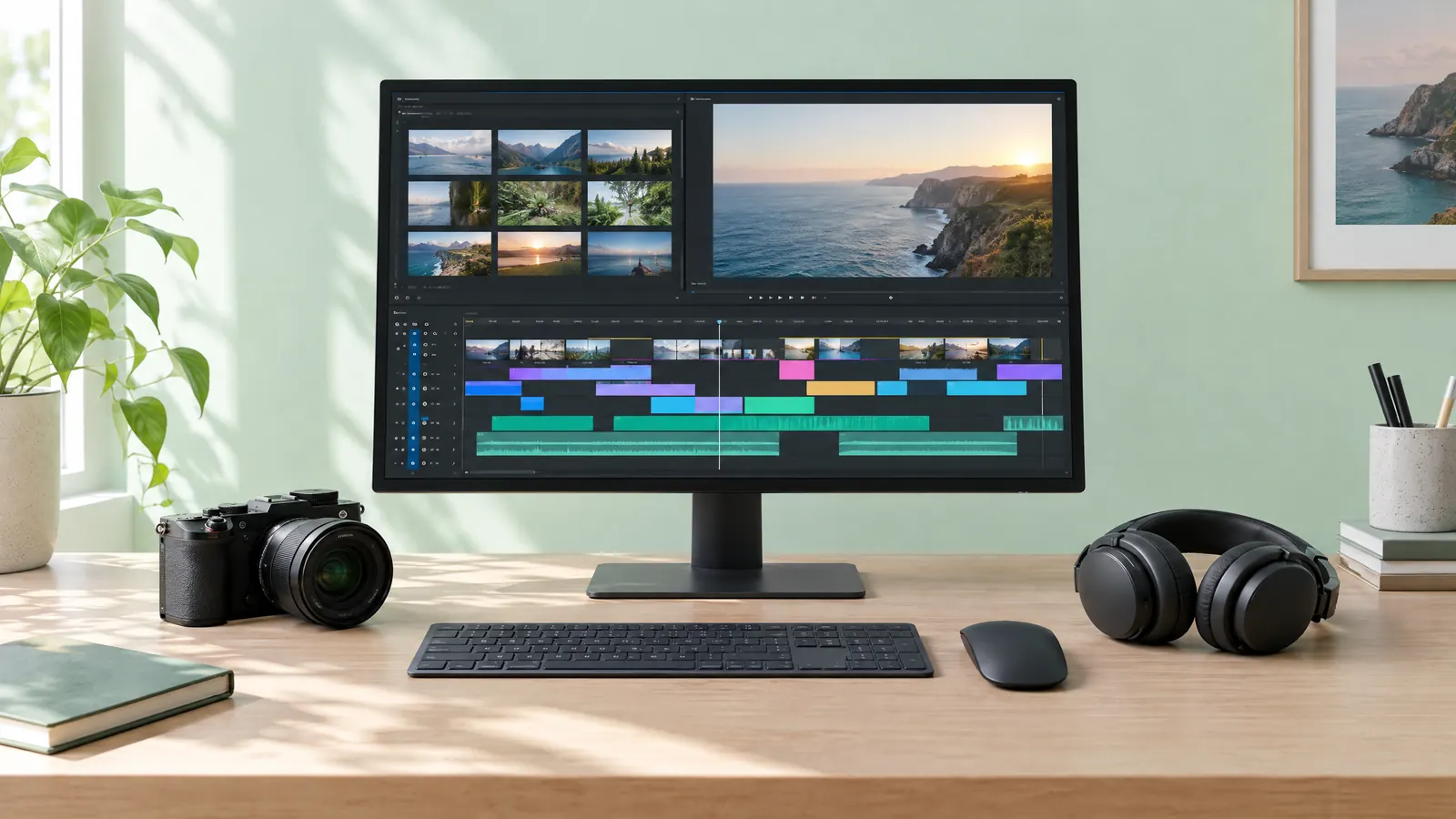
- Editing: cutting and pacing footage into a sequence that holds attention.
- Motion graphics: titles, transitions and brand elements, only where they earn their place.
- Review: feedback rounds on pacing, message and polish.
- Final delivery: formatted, captioned and exported for each platform.
Captions are on by default for social video, styled to the brand. We edit Reels, YouTube Shorts and TikTok as vertical edits, long form YouTube as horizontal, and ad creatives for Meta and Google placements. Revision policy depends on the package and we confirm it during the consultation, so nobody is surprised later.
For businesses posting regularly, editing usually sits inside a monthly plan alongside the social media content calendar, so footage capture, editing and publishing run on one schedule instead of in panicked bursts. If you run a tree, lawn or landscaping crew, my job site video marketing system shows what to film so your editor gets usable footage.
Start with a paid test, then commit
My practical advice: do not sign a long contract on the strength of a showreel. Send a real piece of footage, pay for one finished video at the normal rate, and judge the whole experience: the questions they asked, the turnaround, how they handled feedback and how the video performed once posted. Track it with the same numbers you use for the rest of your content, which I cover in the social media metrics that actually matter. If the test goes well, move to a monthly arrangement. If it does not, you have lost one video, not a quarter.
Frequently asked questions
How much does a video editing service for business cost?
It depends on length, complexity and volume. A short captioned social clip costs far less than an animated brand video with custom motion graphics. Monthly retainers usually suit businesses that publish regularly, while project pricing suits one off videos. Ask for a quote based on your actual footage and a list of deliverables rather than a single flat rate.
How long does professional video editing take?
A simple short form edit can be turned around in a few days, while long form or motion graphics heavy work takes longer. Revision rounds add time, so agree on a schedule that includes feedback. A good service gives you a clear delivery date before starting and tells you early if anything changes.
Should my video editor also write scripts and captions?
For talking head videos, ads and explainers, it helps a lot when the editor is involved in the script, because they know what will cut well. Captions should come from the editing team by default, styled for your brand. If you write scripts yourself, share them early so the edit and the captions follow the same structure.
What footage should I send to a video editor?
Send the original files at full quality, not clips downloaded from WhatsApp or social media, which are compressed. Shoot vertical if the main output is Reels or Shorts. Include a short brief with the goal, audience, call to action, brand fonts and colours, and any examples you like. Label files clearly so nothing is missed.
If you want a second opinion on an editor you are considering, or want to try a test edit with our team, book a free call with me, email info@calibreassociates.com or reach me on LinkedIn.

Written by
Abhijeet Jain
Founder and CEO of Calibre Associates in Lucknow and Managing Director of 716 Lawn Care in Buffalo, New York. I build websites, local SEO, GoHighLevel CRM and AI automation for businesses in India and the USA, and I run the systems I build.