What a Brand Identity Project Actually Includes
A logo is one file. Here is everything a proper brand identity project should hand you, from positioning to launch content and web ready assets.
On this page
- Logo vs brand identity: what is the difference?
- What a brand identity project includes, step by step
- Launch content: the part most brand projects leave out
- The digital assets developers will ask you for
- How we run a brand identity project at Calibre
- Questions to ask before you sign a brand proposal
- Frequently asked questions
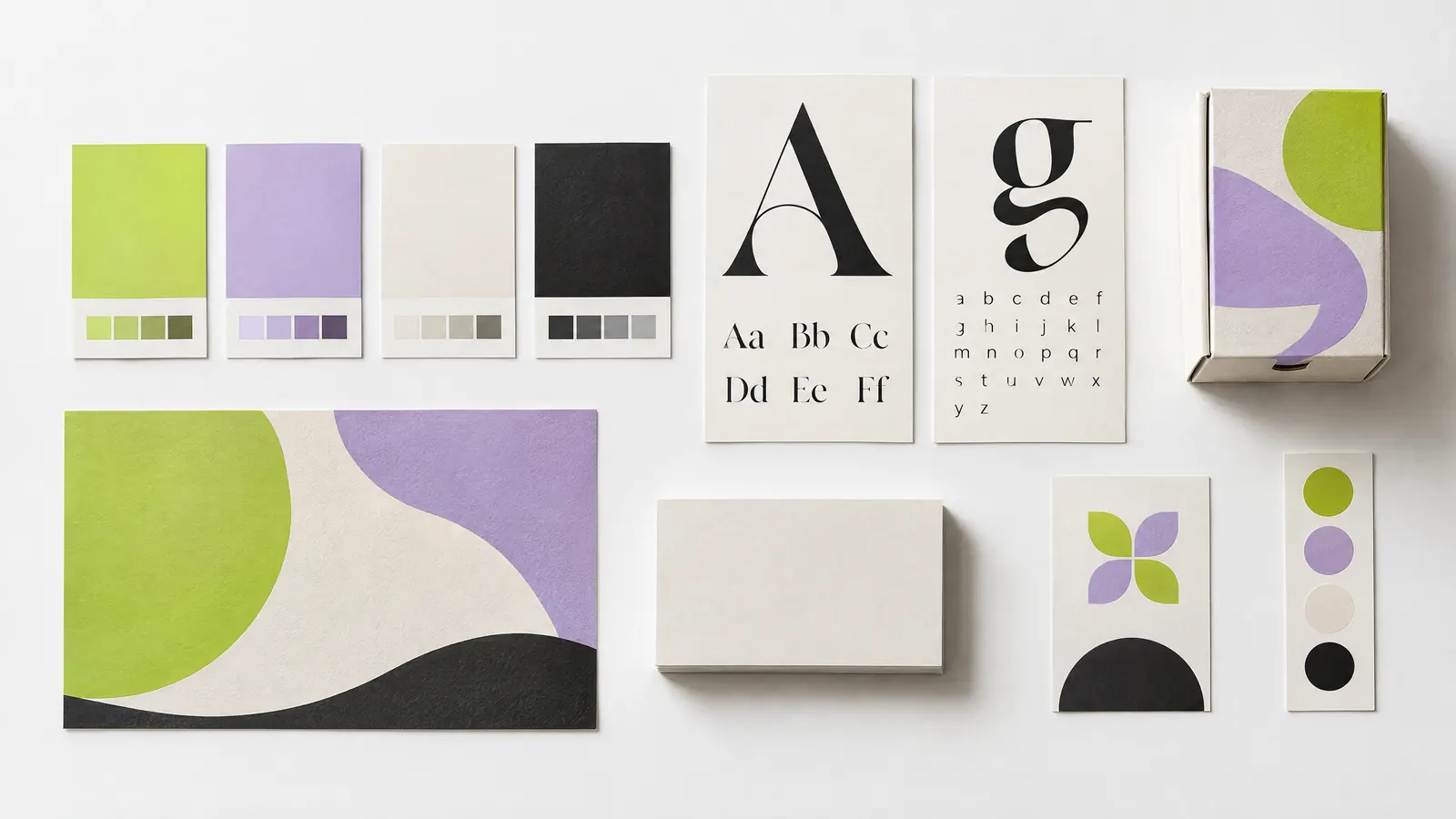
A brand identity project includes the strategy and the full visual system behind a business, not just a logo. Expect discovery and positioning, a logo and wordmark in several versions, a color palette, typography, an imagery style, a tone of voice, packaging or product presentation where relevant, and a brand guide that explains how to use it all. A good project also produces launch content, such as photography, ad creative and short video, so the identity works in real placements from day one.
I come at branding from the build side. My job at Calibre is usually to take a finished identity and make it work on a website, a CRM email, a WhatsApp profile picture and a Google search result. That is where I see what a brand project actually delivered, and what it quietly left out. I cover that build side step by step in my guide to website branding elements that work on a real site.
Key takeaways
- A logo is one deliverable; a brand identity is the system that makes everything look and sound consistent.
- Strategy comes before design: audience, positioning and voice decide what the visuals should do.
- Ask for logo variations, a tested color system, licensed fonts and properly organised source files.
- Launch content and digital assets (favicon, social templates, web ready files) are what make an identity usable on day one.
Logo vs brand identity: what is the difference?
A logo is a single mark. A brand identity is everything around it: the colors, fonts, image style, layout habits and the way the business writes and speaks. The identity is what lets a customer recognise you from a social post with the logo cropped out.
This matters when you compare quotes. One designer might offer a “logo package” with three concepts and a PNG file. Another offers an identity system. Both can be fair prices for what they include, but they are not the same product.
What a brand identity project includes, step by step
1. Discovery and positioning
Before anyone opens a design tool, the team should understand who the brand is for, what it stands for, who it competes with and how it should feel. Expect a questionnaire or workshop, a short competitor review and a written positioning statement. If a studio skips this, the design is a guess with good taste.
2. Brand voice and messaging
How the brand talks: formal or friendly, short or detailed, playful or calm. A good project gives you a few voice principles, sample headlines, a short description of the business in one and three sentences, and words to avoid. This is what keeps your website, ads and customer messages sounding like one company.
3. Logo and wordmark system
You should receive more than one logo. A typical set includes:
- A primary logo (often a wordmark, the brand name set in a distinctive way).
- A secondary or stacked version for tight or square spaces.
- An icon or monogram that still reads at favicon and app icon size.
- Versions in full color, in black, and in white for dark backgrounds.
- Clear space and minimum size rules.
4. Color system
A palette with primary, secondary and neutral colors, each defined in HEX, RGB and CMYK (plus Pantone if you print a lot). Good projects also test text and background pairings for readability. I check pairings against the W3C contrast guidance before a palette goes anywhere near a website, because a beautiful pale green button that nobody can read is a conversion problem, not a style choice.
5. Typography
One or two typefaces with clear rules for headings, body text and small print. Ask how the fonts are licensed for web, print and apps. Free families from Google Fonts are often a sensible choice for small businesses because licensing and web performance are simple.
6. Imagery and graphic style
Photography direction (lighting, subjects, mood), illustration or icon style, patterns, and how graphics sit on a layout. This is the part most logo only projects skip, and it is the part that makes social feeds look consistent.
7. Packaging and applications
For product brands: labels, boxes, cans or bottles. For service brands: business cards, uniforms, vehicle graphics, signage, quote templates, invoices and email signatures. You do not need all of them on day one. List what you will actually use in the next six months.
8. Brand guidelines
A document, usually a PDF or a web page, that explains all of the above with clear dos and don’ts. Your next designer, developer or social media manager should be able to pick it up and produce on brand work without calling the original studio.
Launch content: the part most brand projects leave out
An identity on a presentation board is not a launched brand. To actually go live, you need content in the new style: hero photography, product or service shots, social post templates, ad creative for each stage of the funnel and short video for reels and stories.
At Calibre we plan this from the first call, with a shot list built alongside the identity. Our in house concept projects, Plume, Volta and Slick, show the approach. They are clearly labeled concept campaigns built for fictional products, not client work, and they exist to show the full process from wordmark to funnel creative. I explain how to read concept work honestly in concept work vs client work in an agency’s brand portfolio.
Once the content exists, it needs a plan. My guide to building a social media content calendar you will actually follow picks up where the brand project ends, and optimizing video for each social platform covers the formats your reels will need.
The digital assets developers will ask you for
This is my corner of the project, and it is where handoffs most often break. Make sure your brand package includes:
| Asset | Why it matters |
|---|---|
| SVG logo files | Sharp at any size on websites and light to load |
| Square icon in high resolution | Favicon, app icon, social profile picture, Google Business Profile |
| Color values as HEX codes | Developers set them once as site wide variables |
| Web font files or Google Fonts names | Correct typography without licence problems |
| Social templates in an editable format | Your team can post on brand without a designer every time |
That square icon is not a detail. Google can show a favicon next to your site in its search results, and its favicon guidelines explain the size and format it expects. A logo that falls apart when shrunk to a tiny square will look careless right where customers first meet you.
How we run a brand identity project at Calibre
Our process has eight stages: discovery, positioning, identity design, shot list planning, campaign production, funnel creative, review and refinement, then delivery of a complete launch kit. Creative direction comes from Manasvi Pathak, our Co Founder and Talent Manager, and my team makes sure the identity holds up in code.
Two things make our approach different from hiring a logo designer and a separate content agency. First, the identity and the launch content are planned together, so the photography and ads match the system from the start. Second, the same team can carry the brand straight into a website, social media and video. You can see the scope on our brand identity and logo design page. If you are choosing who builds the website afterwards, my notes on how to choose a website development company in India may help.
Questions to ask before you sign a brand proposal
- How many logo concepts and revision rounds are included?
- Will I own all source files and have the right fonts licensed?
- Is a written brand guide included, and in what format?
- Does the price include any launch content, or only the identity?
- Will you deliver web ready files and a favicon, or is that extra?
Frequently asked questions
What is included in a brand identity package?
A full brand identity package usually includes discovery and positioning, a logo and wordmark in several versions, a color palette, typography, an imagery style, tone of voice guidance, any packaging or stationery you need, and a brand guidelines document. Stronger packages also include launch content such as photography, social templates, ad creative and short video.
How is a brand identity different from a logo?
A logo is one mark. A brand identity is the complete system around it: colors, fonts, imagery, layout style and voice. The identity is what makes your website, packaging, social posts and ads look like the same business, even when the logo is not visible. A logo alone cannot do that job.
What files should I receive at the end of a branding project?
Ask for logo files in SVG, PNG and PDF, in color, black and white versions, plus a high resolution square icon for favicons and profile pictures. You should also get color codes in HEX, RGB and CMYK, font names with licence details, editable templates and a brand guide that explains how to use everything.
How long does a brand identity project take?
It depends on scope. A focused package with a wordmark, color system and a core set of photography can move quickly. A complete identity with packaging, full funnel ad creative and a video reel takes longer to plan and produce properly. A clear timeline should be agreed after the discovery call, before design begins.
If you are planning a new brand or a rebrand and want to talk through what you really need, book a free consultation, email info@calibreassociates.com or find me on LinkedIn.

Written by
Abhijeet Jain
Founder and CEO of Calibre Associates in Lucknow and Managing Director of 716 Lawn Care in Buffalo, New York. I build websites, local SEO, GoHighLevel CRM and AI automation for businesses in India and the USA, and I run the systems I build.